Does Remote Work Weaken the Working Class? A Critical Labor Analysis

By BluebirdbBeta | New Syndicalist
The image was everywhere in the spring of 2020: a worker in pajamas, laptop open on a kitchen table, liberated from the open-plan office and the tyranny of the commute. As the COVID-19 pandemic forced tens of millions of American workers out of shared workplaces and into home offices, guest bedrooms, and kitchen counters, a certain class of commentator declared that the future of work had arrived ahead of schedule.
But liberation for whom, exactly? And at what structural cost to the collective power of the working class?
These are not abstract questions. The conditions in which workers encounter one another — or fail to — have profound consequences for their capacity to organize, resist, and build the kind of solidarity that transforms individual grievance into collective power. The rapid, pandemic-driven expansion of remote work deserves a serious labor analysis, not merely a lifestyle assessment.
The Workplace as a Site of Solidarity
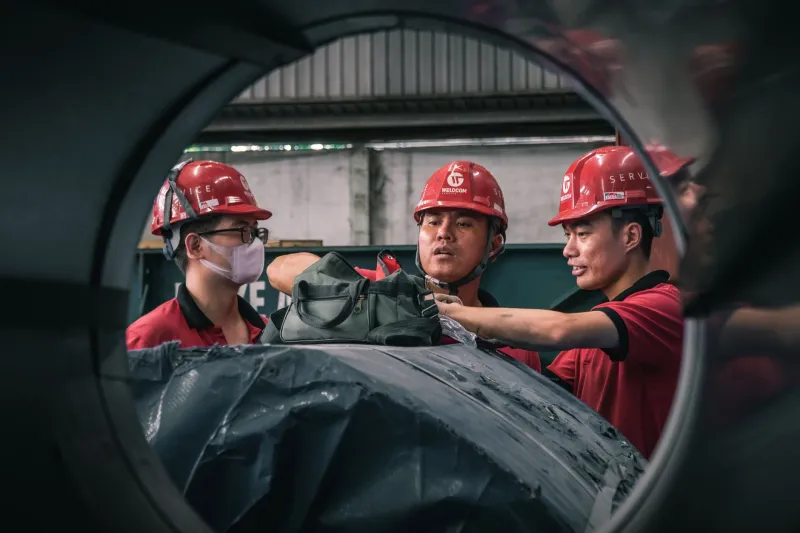
For most of the history of organized labor in the United States, the shared physical workplace was not merely a location where work happened — it was the primary site where working-class consciousness was forged. The factory floor, the warehouse loading dock, the hospital break room: these are spaces where workers encounter one another as workers, where they share grievances in real time, where organic leaders emerge, and where the social fabric of collective action is woven.
Proximity matters enormously in organizing. The spontaneous conversation at the coffee machine, the shared frustration over a supervisor's decision, the moment when one worker turns to another and says this isn't right — these are the raw materials of labor organizing. They are difficult to replicate across a Slack channel or a Zoom call, and nearly impossible to manufacture artificially.
When workers are dispersed into private homes, they are also dispersed from one another. The informal networks that sustain shop-floor organizing — the trust built through daily proximity, the shared knowledge of who the organic leaders are, the collective reading of management's behavior — are disrupted or severed entirely.
Surveillance, Isolation, and the Atomized Worker
The dispersal of the workforce into individual homes does not simply reduce organizing opportunity. It actively strengthens several mechanisms of employer control that labor movements have historically worked to counteract.
First, isolation. One of the most consistent findings in labor organizing research is that isolated workers are less likely to take collective action. Isolation breeds uncertainty about whether one's grievances are shared, whether one's coworkers can be trusted, and whether collective action is possible at all. The remote worker, cut off from the informal social world of the shared workplace, is structurally more isolated than their in-office counterpart — and therefore, on average, more manageable.
Second, surveillance. The shift to remote work has been accompanied by an extraordinary expansion of workplace monitoring technology. Employers across the United States have deployed software that tracks keystrokes, captures periodic screenshots, monitors mouse movement, and logs application usage. What is presented as productivity management is, from a labor perspective, a surveillance infrastructure that makes workers more legible to management and less able to engage in the kind of informal coordination — the quiet conversation, the shared eye-roll — that precedes organized resistance.
Third, the erosion of the boundary between work and life. Remote work does not simply move labor into the home; it colonizes domestic space with the logic and demands of the employer. Workers who are always reachable are never fully off the clock. The spatial separation between work and rest — never perfectly maintained even in the best circumstances — collapses entirely. This is not flexibility; it is the extension of managerial control into the last remaining space the worker could call their own.
The Two-Tier Reality
Any honest analysis of remote work and working-class power must also grapple with the profound class stratification that the remote-work debate tends to obscure. The workers who can work from home — software engineers, financial analysts, writers, managers — are not representative of the American working class. They are, by and large, among its more privileged strata.
The workers who cannot work from home — warehouse workers, delivery drivers, agricultural laborers, healthcare aides, grocery store clerks, sanitation workers — are the workers who kept the economy functional during the pandemic, at enormous personal risk, with minimal compensation. These workers were not liberated by the remote-work revolution. They were, if anything, further stratified from their white-collar counterparts, their essential nature acknowledged in rhetoric while their conditions remained unchanged or worsened.
A labor politics that centers the remote-work experience as the paradigmatic condition of the contemporary working class is a labor politics that has lost touch with the material conditions of most workers.
Organizing in Dispersed Conditions
None of this analysis should be read as a counsel of despair, or as an argument that remote workers are beyond the reach of organizing. Workers have organized across dispersed and difficult conditions throughout labor history — from farmworkers spread across vast agricultural landscapes to sailors whose workplace moved with them across oceans.
But organizing dispersed workers requires different tools, more deliberate relationship-building, and a clear-eyed understanding of the structural obstacles. Digital communication platforms can support organizing networks, but they cannot substitute for the relational depth that physical proximity enables. Organizers working in remote-heavy sectors must invest more heavily in the one-on-one conversation, in the creation of virtual spaces that approximate the social function of the break room, and in the identification of organic leaders who can sustain networks across geographic distance.
Labor law, too, must be updated to reflect the reality of dispersed workplaces. The National Labor Relations Act was written for an era of concentrated industrial employment. Its categories and procedures are ill-suited to a workforce that may be geographically scattered across multiple states while nominally employed by the same entity.
The Stakes of Getting This Right
The pandemic accelerated several trends that were already reshaping the American workplace, and remote work is likely to remain a permanent feature of the labor landscape for a significant portion of the workforce. The labor movement cannot afford to ignore its implications, nor can it afford to romanticize an office-based status quo that was never particularly hospitable to worker power.
What is required is a rigorous, honest analysis of how dispersal affects solidarity — and a commitment to developing the organizing strategies, legal frameworks, and institutional forms capable of building collective power under the conditions that actually exist. The working class is not weakened by remote work inevitably or permanently. But it is challenged in new ways that demand new responses.
The shop floor has always been wherever workers are. The task of organizing it remains the same.