Beyond the Time Card: Warehouse Workers Push Into the Boardroom of Their Own Labor
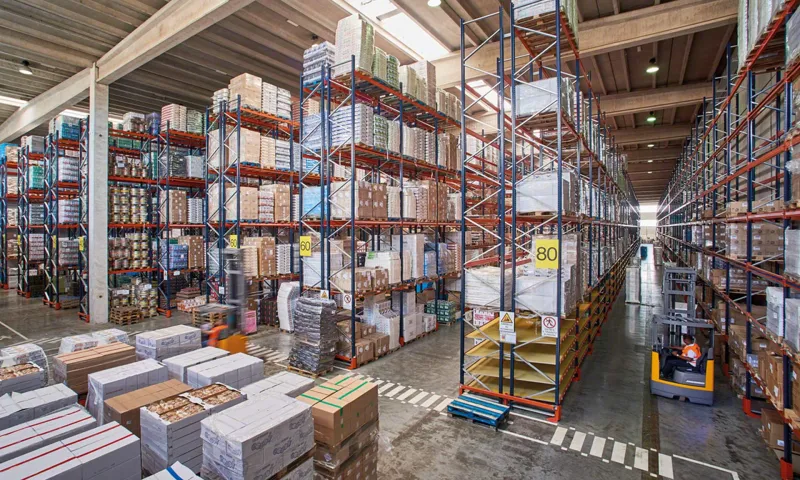
Photo: warehouse workers meeting distribution center logistics planning, via mecaluxcom.cdnwm.com
For decades, the implicit bargain inside America's distribution centers has been straightforward, if deeply unequal: management plans, workers execute. The worker's domain ends at the edge of the pallet jack. Questions of scheduling architecture, workflow design, and safety protocol belong, by institutional convention, to supervisors, industrial engineers, and corporate consultants who rarely set foot on the warehouse floor. That arrangement is now facing a serious and organized challenge.
Across distribution hubs in states from New Jersey to California, workers are advancing a different proposition — one that insists their intimate, embodied knowledge of warehouse operations constitutes a form of expertise that deserves formal recognition and structural power. This is not merely a rhetorical shift. Organizers are pushing for enforceable co-management frameworks: joint labor-management committees with genuine decision-making authority, not the advisory panels that management has historically deployed to absorb worker frustration without conceding control.
The Limits of the Wage Frame
The conventional logic of labor relations treats the employment relationship as a transaction: workers sell their time, employers compensate them for it, and the terms of that exchange are subject to negotiation. Within that frame, the highest ambition of a union contract is a better price for the same subordination.
Workers in the logistics sector are increasingly articulating a critique of this frame that is both practical and political. A wage increase, they argue, does not address the mandatory overtime system that makes family life unmanageable. A grievance procedure does not give workers the authority to redesign a picking route that causes repetitive stress injuries at a statistically alarming rate. Better pay does not change the fact that productivity algorithms set quotas based on data that management controls and workers cannot independently audit.
"We know this building better than anyone in that corporate office," said one organizer at a major fulfillment center in the Inland Empire region of Southern California, speaking on condition of anonymity due to ongoing labor actions. "We know where the bottlenecks are. We know which shifts are understaffed before the numbers even come in. But nobody asks us. They pay consultants to figure out what we already know."
This gap between operational knowledge and operational authority is precisely what the co-management movement seeks to close.
Pilot Programs and Their Discontents
A handful of distribution operations — primarily at companies with established union contracts and sufficient internal pressure — have experimented with joint labor-management structures that go beyond traditional safety committees. In several documented cases, worker representatives have gained seats on scheduling review boards, with limited but real authority to flag and contest shift assignments that conflict with contractual rest provisions or create dangerous fatigue conditions.
The results have been instructive. Where worker representatives hold genuine veto power over specific categories of decisions, the outcomes are measurably different. Injury rates in departments with active joint oversight have declined in at least two facilities where organizers have shared internal data with labor researchers. Turnover, a chronic and expensive problem for distribution center operators, has shown modest improvement in units where workers report feeling heard in operational planning.
Yet the institutional resistance to expanding these models is substantial. Management teams at major logistics firms have proven adept at constructing joint committees that carry the appearance of shared governance while preserving executive control over every decision that actually matters. Agendas are curated. Data is withheld. Recommendations are received, acknowledged, and quietly shelved. Workers who have participated in such structures describe a familiar pattern: initial enthusiasm, gradual frustration, and eventual recognition that the committee was designed to neutralize rather than empower.
"They give you a seat at the table," one veteran warehouse worker in Memphis told a regional labor publication last year. "But they control the table, the chairs, the agenda, and the minutes. And if you push too hard, the table disappears."
The Syndicalist Argument for Operational Power
The theoretical foundation for what these workers are demanding has deep roots in the labor tradition. Syndicalist thought has long held that the point of production — the factory floor, the warehouse dock, the distribution hub — is the proper site of worker authority, and that any arrangement short of genuine worker control over the conditions and organization of labor is an incomplete victory at best.
That tradition is not merely historical. It is increasingly relevant to a logistics industry that has become, in many respects, the central nervous system of the American economy. The concentration of distribution infrastructure in the hands of a small number of corporate actors has created enormous leverage — and enormous vulnerability. Workers who understand the operational architecture of that infrastructure are not simply laborers. They are, in a functional sense, the engineers of the supply chain. The argument for their participation in its governance is not sentimental. It is structural.
Organizers in this space are drawing on that argument with growing sophistication. Rather than framing co-management demands as a workplace amenity or a morale initiative, they are presenting them as a question of industrial democracy: who has the right to govern the systems through which a society moves its goods?
Building the Architecture of Accountability
The most durable advances in this area have come not from management goodwill but from contractual specificity. Vague language about "worker input" is easily hollowed out. What has proven more resilient are provisions that establish mandatory timelines for management responses to worker proposals, require disclosure of operational data that workers need to participate meaningfully in planning discussions, and create enforceable consequences when joint committee decisions are overridden without documented justification.
Several labor attorneys and union negotiators who work in the logistics sector have begun developing model contract language designed to institutionalize these protections. The goal is to make co-management not a favor that management extends in favorable conditions, but a structural feature of the employment relationship that persists across changes in corporate leadership, ownership, and economic climate.
The work is slow. The opposition is well-resourced. But the workers advancing these demands have something that corporate consultants and industrial engineers do not: they are present, every shift, in the operational reality they are seeking to govern. That presence is, in the end, the source of their leverage — and the foundation of any genuine claim to democratic authority over their own labor.
The time card, in this reading, is not the boundary of the worker's domain. It is merely where the conversation begins.