Sold Out from the Top: Union Bureaucracy, Captured Leadership, and the Rank-and-File Fight to Take Back the Movement
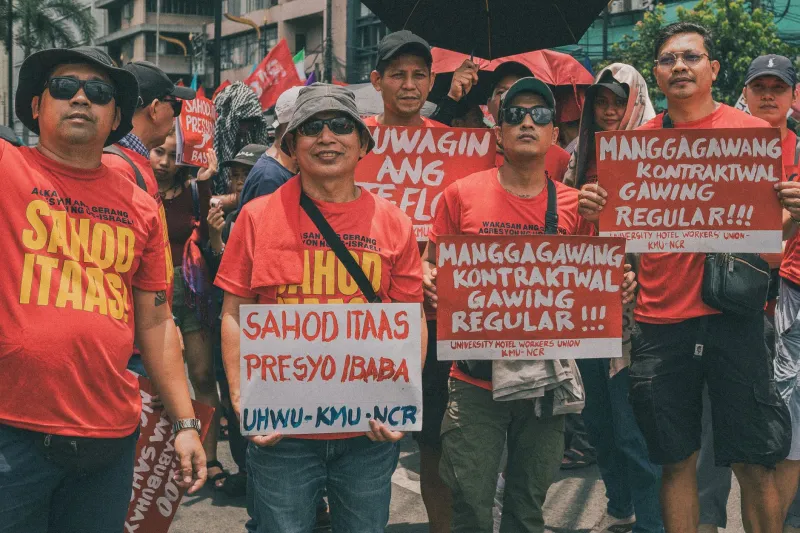
In the summer of 2023, members of the United Auto Workers watched their sitting president, Ray Curry, campaign openly against a reform slate that had spent years organizing from the shop floor up. The reformers, running under the United All Workers for Democracy (UAWD) banner, ultimately delivered Shawn Fain to the presidency — a result that many analysts treated as an anomaly, an outlier in an otherwise stable institutional landscape. But for students of labor history, it was something far more familiar: the latest episode in a decades-long confrontation between entrenched union officialdom and the workers those officials are supposed to represent.
The question worth asking is not simply why individual leaders go wrong. The more illuminating question is structural — what forces, incentives, and institutional arrangements reliably push union bureaucracies away from their membership and toward accommodation with capital?
The Bureaucratic Gradient
Unions, like any large organization, develop internal hierarchies that generate their own interests. A local president earns a salary. A regional director controls a staff. A national officer commands a budget, a building, a staff pension, and a seat at tables where corporate executives and politicians also sit. None of this is inherently corrupt, but it does create what labor scholars call the "bureaucratic gradient" — a slow drift in which the material interests of officials diverge from those of the members who elected them.
This gradient accelerates under specific conditions. When union contracts include management rights clauses that limit shop-floor militancy, officials have less reason to mobilize members and more reason to cultivate relationships with HR departments. When dues revenue becomes the primary organizational metric, retaining existing members matters more than organizing new ones. When labor law channels conflict into NLRB procedures and arbitration, officials become quasi-lawyers managing cases rather than organizers building power.
The result, repeated across industries and decades, is what sociologist Robert Michels once called the "iron law of oligarchy" — the tendency of democratic organizations to become dominated by a self-perpetuating leadership stratum more committed to institutional survival than transformative goals.
Case Studies in Capture
The history of the Teamsters under the Fitzsimmons and Presser administrations in the 1970s and 1980s offers one of the starkest illustrations. Officials who had once presided over one of the most powerful unions in North America negotiated sweetheart contracts, suppressed dissent through the union's internal disciplinary machinery, and in some documented cases maintained relationships with organized crime figures who helped them stay in power. The rank-and-file movement Teamsters for a Democratic Union (TDU), founded in 1976, spent fifteen years building the organizational infrastructure that eventually delivered Ron Carey to the presidency in 1991 — the union's first direct membership election.
More recently, the story of the Service Employees International Union's relationship with its home care workers in California illustrates a subtler form of capture. SEIU spent years cultivating a close partnership with Democratic Party officials and corporate healthcare providers, prioritizing political access over shop-floor power. When members in some locals attempted to challenge contract concessions or demand greater transparency over political expenditures, they encountered an institutional apparatus — trusteeship procedures, appointed rather than elected stewards, top-down communication structures — designed to insulate leadership from member pressure.
The pattern is not exclusive to any single union or political tendency. It is, rather, a structural feature of how American labor law and institutional design interact with the natural tendencies of large organizations.
The Accountability Architecture
What distinguishes the rank-and-file movements that have successfully challenged captured leadership is not simply their willingness to fight — it is the organizational infrastructure they build before the fight begins.
TDU did not emerge as a protest movement and then figure out how to win. It spent years building a network of workplace contacts, publishing a newsletter that circulated across locals, training members in labor law and parliamentary procedure, and creating a culture of mutual accountability that could survive the inevitable periods of setback and repression. By the time the conditions for a leadership challenge materialized, TDU had the organizational density to take advantage of them.
The same pattern is visible in the Chicago Teachers Union's CORE caucus, which took control of the CTU in 2010 after years of methodical member organizing. CORE built its base not through internal political maneuvering but through direct engagement with members on bread-and-butter workplace issues — grievance support, contract education, school-by-school relationship building. When it ran for leadership, it had earned credibility that no endorsement from existing officials could manufacture.
Currently, formations like UAWD in the UAW, Educators for a Democratic Union in various teacher locals, and rank-and-file caucuses in the Communication Workers of America are applying similar logic. They are building what organizers call "dual power" within their own institutions — parallel structures of member engagement that can hold leadership accountable without waiting for leadership to invite accountability.
Structural Reforms That Matter
Beyond electoral challenges, the rank-and-file reform tradition has consistently pushed for structural changes that make capture harder to sustain. The most consequential of these include direct membership elections for all officers (as opposed to delegate-based conventions that insulate officials from member pressure), strict salary caps that limit the material gap between leaders and members, mandatory financial transparency and open books, elected rather than appointed stewards, and sunset provisions on contracts that force regular renegotiation rather than allowing concessions to become permanent.
These are not radical demands in the abstract sense. They are the basic mechanics of democratic governance applied to labor institutions. Their implementation, however, requires members to be organized enough to demand them — which is precisely why captured leaderships resist them.
The Stakes
The capture of union leadership is not merely an internal organizational problem. It has direct consequences for the broader labor movement's capacity to confront capital at a moment when that confrontation is urgently necessary. Unions whose officials are more accountable to employers than to members cannot lead effective strikes. They cannot build the kind of solidarity networks that sustain workers through prolonged struggles. They cannot develop the organizational culture that turns members into activists rather than passive dues payers.
The rank-and-file movements working to reclaim democratic control of their unions are, in this sense, doing something more than winning internal elections. They are rebuilding the organizational substrate on which any serious workers' movement must rest. The lessons they are generating — about patience, infrastructure, accountability, and the long work of building power from below — are lessons the broader left cannot afford to ignore.