The Treasury of Resistance: Building Strike Funds That Can Actually Win
When approximately 48,000 United Auto Workers members walked off the job at General Motors in 2019, they did so backed by a strike fund that, at its peak, held approximately $790 million. The strike lasted forty days. GM ultimately settled on terms that included wage increases, a path to permanent employment for temporary workers, and profit-sharing improvements. The size of the UAW's war chest did not guarantee victory, but it provided the material foundation without which no extended strike can be sustained.
Contrast that with the chronic underfunding that has undermined countless other work stoppages. Unions that enter strikes with three to four weeks of reserve capacity — barely enough to cover a month of modest weekly payments to members — find themselves forced back to the table not because the employer has made meaningful concessions, but because workers cannot afford to stay out. The employer's strategy in such cases is straightforward: wait. Financial attrition does what legal maneuvers cannot.
Understanding why some strikes succeed and others collapse requires, among other things, a serious examination of strike fund economics.
What a Strike Fund Actually Is — and Is Not
A strike fund is a designated financial reserve maintained by a union or worker organization for the explicit purpose of supporting members during a work stoppage. In practice, funds are disbursed as weekly strike benefits — payments made to workers on strike to partially offset lost wages and help them meet essential expenses while the dispute continues.
Strike benefits in the United States vary enormously. The Communications Workers of America has historically paid around $300 per week. The UAW paid $275 per week during the 2019 GM strike, a figure that was widely criticized as inadequate given the cost of living in many of the affected communities. Some smaller, more militant unions have developed tiered benefit structures that pay more to workers with dependents or higher essential expenses. The International Longshore and Warehouse Union maintains one of the more generous benefit structures in the country, a reflection of both the union's financial strength and its strategic philosophy.
It is important to understand what strike benefits are not: they are not wage replacement. Even the most generously funded strike benefit covers a fraction of a worker's normal take-home pay. The economic logic of a strike is not that workers can sustain indefinitely on strike pay — they cannot — but that the employer's losses from the work stoppage outpace the workers' capacity to endure hardship. Strike fund design, therefore, is fundamentally about extending that endurance threshold.
The Funding Models That Actually Work
There are three primary funding models for strike reserves, each with distinct advantages and structural vulnerabilities.
The Percentage-of-Dues Model is the most common approach. Unions designate a fixed percentage of monthly member dues — typically between ten and thirty percent — to flow automatically into a protected strike fund account. The advantage is predictability: the fund grows steadily during periods of labor peace and is available when needed. The disadvantage is that it takes years, sometimes decades, to accumulate meaningful reserves. A union with 5,000 members paying $50 per month in dues, directing twenty percent to the strike fund, accumulates roughly $500,000 per year — enough to fund about ten weeks of modest benefits before the reserve is exhausted.
The Solidarity Assessment Model involves levying a special assessment on members — either during an active dispute or in anticipation of one — to rapidly build reserves. This model was used effectively by the Chicago Teachers Union in the years leading up to its 2012 strike. The assessment created a sense of shared investment in the outcome and helped build the political will among membership to sustain the action. The risk is assessment fatigue: members who are already financially stretched may resist additional contributions, particularly if previous strikes have ended in outcomes perceived as disappointing.
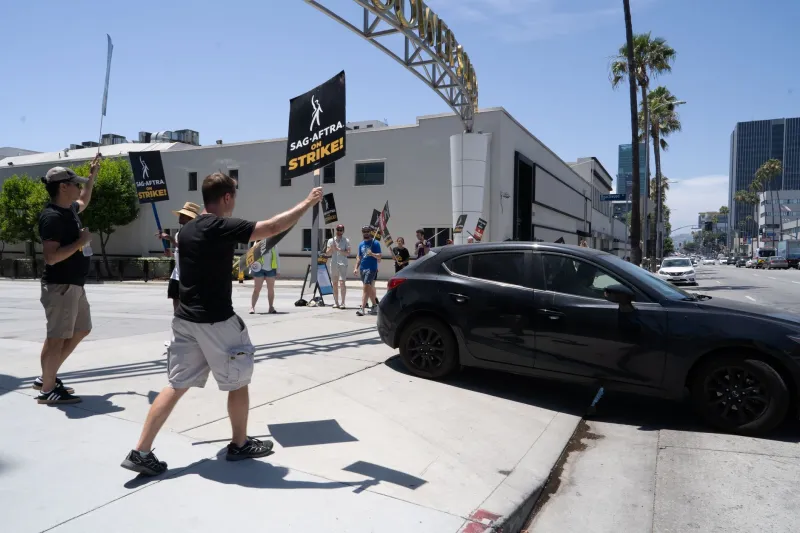
The External Solidarity Fund Model has gained considerable momentum in recent years. Under this approach, unions solicit contributions from allied unions, progressive organizations, mutual aid networks, and individual supporters to supplement internal reserves. The 2023 SAG-AFTRA and WGA strikes demonstrated the potential of this model at scale. GoFundMe campaigns, direct solidarity funds established by labor federations, and employer-specific boycott campaigns that redirected consumer spending toward worker support all played meaningful roles in sustaining those disputes.
Case Studies in Fund Design
The 2021 Kellogg's strike, in which approximately 1,400 members of the Bakery, Confectionery, Tobacco Workers and Grain Millers International Union walked off the job for eleven weeks, illustrates both the possibilities and the limits of modern strike fund management. The union's strike benefits — approximately $300 per week — were supplemented by a significant public solidarity campaign that generated hundreds of thousands of dollars in external contributions. A coordinated social media effort encouraging consumers to boycott Kellogg's products amplified the economic pressure on the employer. The strike ultimately ended in a ratified contract, though rank-and-file opinion on the terms was divided.
The 2022 Starbucks Workers United campaigns offer a different lesson. Because the organizing drives at individual stores were not backed by a large institutional union treasury, strike actions at specific locations were necessarily short — single-day walkouts timed for maximum visibility rather than sustained economic pressure. The strategic value of these actions was primarily symbolic and political, generating media coverage and membership momentum. But they could not, by design, impose the kind of sustained financial pain on the employer that forces genuine concession at the bargaining table. The lesson is not that these actions were wrong, but that their objectives were necessarily constrained by the financial infrastructure available.
Designing for Durability
For unions and worker organizations building or rebuilding their financial capacity for sustained action, several design principles emerge from the evidence.
First, reserve targets should be set against realistic strike duration projections, not against some abstract adequacy standard. A union whose employer has historically settled within thirty days needs a different reserve than one whose employer has a documented practice of extended lockouts.
Second, benefit structures should account for member economic diversity. A flat weekly benefit that is adequate for a single worker in a low-cost-of-living area may be catastrophically inadequate for a worker with dependents in a high-cost metropolitan market. Tiered benefits, while administratively more complex, more accurately reflect the actual hardship distribution among striking members.
Third, external solidarity infrastructure should be built before it is needed. The relationships with allied unions, progressive foundations, and community organizations that make external fundraising possible during a strike cannot be constructed in real time. They require years of cultivation during periods of relative labor peace.
Finally, transparency builds political will. Members who understand the state of their strike fund — who know what is available, what it will cover, and for how long — are better positioned to make informed decisions about strike authorization and duration. Financial opacity, by contrast, breeds anxiety and susceptibility to employer pressure campaigns that exaggerate union weakness.
The economics of worker resistance are not romantic. They are a matter of reserves, disbursement rates, duration modeling, and external resource mobilization. Getting those mechanics right is not peripheral to the project of building worker power. It is, in many decisive moments, the project itself.