Hands That Hold Everything: The Care Worker Movement Transforming American Labor From the Ground Up
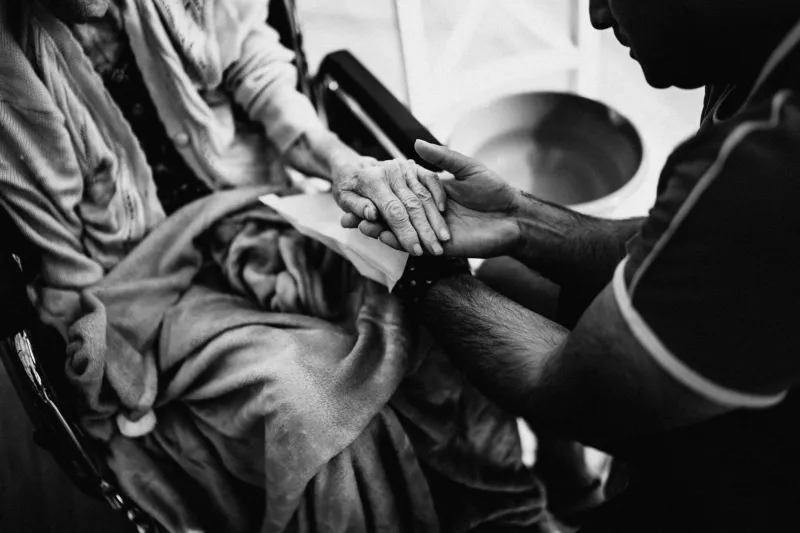
Consider what care workers do. They bathe elderly people who cannot bathe themselves. They administer medication, manage catheters, prepare meals, and sit with the dying. They raise other people's children. They make possible, in the most literal sense, the reproduction of daily life for millions of American households and institutions. Without them, the economy — the part of the economy that everyone else participates in — does not function.
Now consider what care workers earn. The median annual wage for home health aides in the United States hovers near $30,000. Nursing assistants in long-term care facilities frequently earn less. Domestic workers — nannies, housecleaners, personal care attendants — are among the most economically precarious workers in the country, excluded from the National Labor Relations Act's protections in a legislative legacy that traces directly to the racial compromises of the New Deal era.
The gap between what care workers contribute and what they receive is not an accident. It is policy. And it is increasingly, visibly, unsustainable.
A Workforce Hiding in Plain Sight
The care sector is enormous and growing. The Bureau of Labor Statistics projects that home health and personal care aides will represent one of the fastest-growing occupations through 2032, driven by an aging population and a policy preference — cemented across administrations of both parties — for home-based rather than institutional care. There are already more than three million home care workers in the United States. That number will continue to rise.
The workforce is also among the most demographically concentrated in American labor. The majority of home care workers are women. A disproportionate share are Black women and immigrant women, many of the latter undocumented or on precarious visa statuses that compound their vulnerability to employer coercion. The intersection of race, gender, and immigration status has historically been used to suppress both wages and organizing — and it has worked. Care work has been systematically undervalued because the workers who perform it have been systematically undervalued.
That calculation is changing.
The New Frontier of Militancy
Across the country, care workers are organizing with a ferocity and creativity that has surprised even veteran labor observers. The forms this organizing takes vary considerably by sector and geography, but several distinct currents are worth examining.
In the home care sector, the Service Employees International Union has for two decades pursued a model of political unionism — organizing workers as a constituency that can deliver electoral power in exchange for legislative improvements to wages and working conditions. This model has produced real gains in states including California, Illinois, and New York, where home care workers covered by Medicaid are employed, in legal fiction, by the state or by public authorities, making traditional collective bargaining possible. In California alone, SEIU-represented home care workers have seen minimum wages rise substantially over the past decade, driven by a combination of contract campaigns and state legislative advocacy.
But the SEIU model has limits. It depends on political access that is not uniformly available, and it covers a fraction of the total home care workforce. Workers employed directly by private households, those paid through private insurance or out of pocket, and those employed by private home care agencies often fall outside its reach.
For these workers, a different kind of organizing is taking hold. Worker centers — organizations that provide services, advocacy, and community to workers outside the traditional union structure — have become critical infrastructure. The National Domestic Workers Alliance, founded in 2007 and now representing workers in dozens of cities, has pioneered a model that combines direct services, policy advocacy, and base-building in a way that does not depend on NLRA certification. Several states, including New York, California, and Illinois, have passed Domestic Workers Bills of Rights through campaigns led by NDWA affiliates — legislative victories that extended basic labor protections to a workforce the original New Deal deliberately excluded.
What Is Working — and Why
The care worker movement's effectiveness rests on several strategic insights that distinguish it from more conventional labor campaigns.
Care work is relational by nature. The relationships between care workers and the people they care for — and between care workers and the families of those people — create leverage that factory or warehouse workers do not have. When a nursing home's residents and their families stand alongside workers in a strike or public action, the moral and political weight is substantial. Effective care worker campaigns have deliberately cultivated these alliances, framing worker conditions as inseparable from care quality.
The employer is often the state. In Medicaid-funded home care, the ultimate payer is a government agency. This means that political action — lobbying, electoral organizing, public demonstrations — is not a supplement to workplace organizing; it is the primary terrain of struggle. Care worker organizations that have understood this have invested heavily in civic power, voter registration, and candidate development in ways that more conventionally workplace-focused unions have not.
Community and workplace are not separate. For many care workers, especially immigrants and women of color living in segregated, under-resourced communities, the conditions of work and the conditions of life are continuous. Organizations that address both — that provide legal services, language access, childcare, and community alongside workplace advocacy — build a depth of loyalty and engagement that purely transactional union models cannot replicate.
The Structural Stakes
The care worker movement is not only significant for the workers directly involved. It is a test case for the future of American labor organizing more broadly.
The workforce of the future is disproportionately service-sector, disproportionately female, disproportionately non-white, and disproportionately employed in conditions — part-time, home-based, fragmented across multiple employers — that the existing legal framework of labor relations was not designed to address. Care work is simply the most extreme current expression of these conditions. The strategies that work for care workers — political unionism, worker centers, legislative campaigns, relational organizing — are the strategies that will need to work across a much wider swath of the American working class.
There is also a deeper ideological dimension to this struggle. Care work has been devalued because it has been feminized, and it has been feminized because it was first performed, without compensation, within the household. The demand that care work be recognized, compensated, and organized is not merely a labor demand. It is a challenge to the foundational assumption that some forms of human labor — specifically those associated with women, with reproduction, and with the sustenance of life — are less deserving of economic recognition than others.
What Comes Next
The care worker movement has momentum. It also faces formidable obstacles: underfunded public programs, a private care industry structured around thin margins and labor cost suppression, and an immigration enforcement apparatus that many employers use, explicitly or implicitly, as a disciplinary tool against organizing workers.
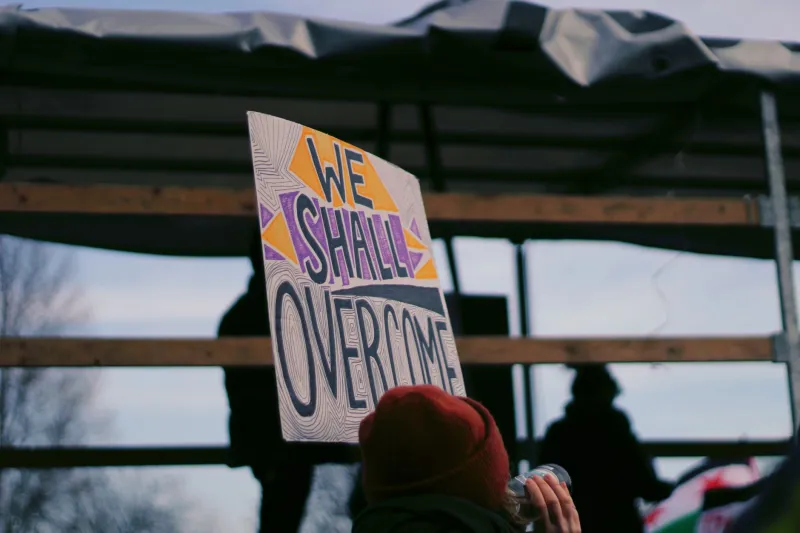
None of these obstacles is insurmountable. What the movement has demonstrated, already, is that workers who have been told they are too marginal, too vulnerable, and too isolated to organize are doing exactly that — and winning. The hands that hold everything are, at last, beginning to close into fists.