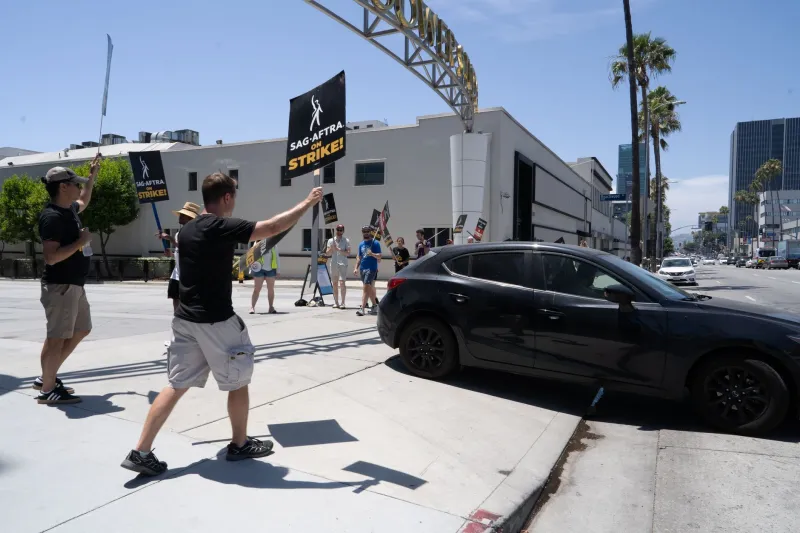
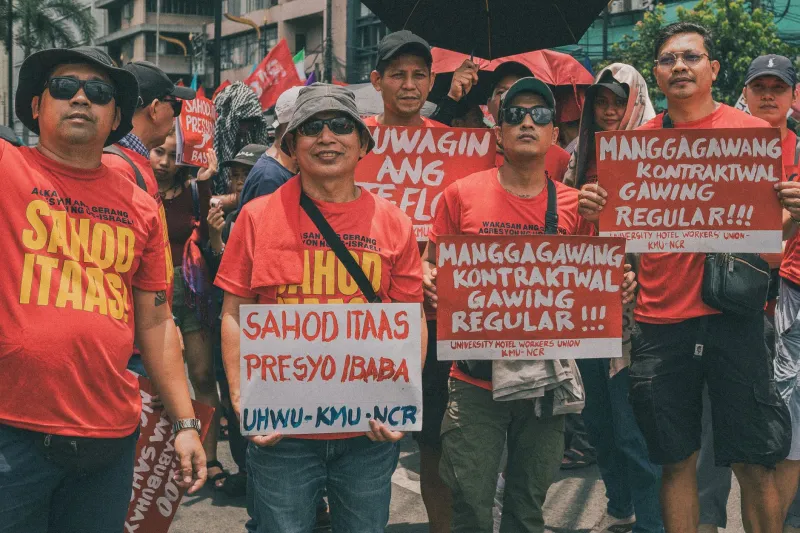
Organizing in Hostile Territory: How Shop Stewards Are Forging Worker Power Where Unions Are Weakest
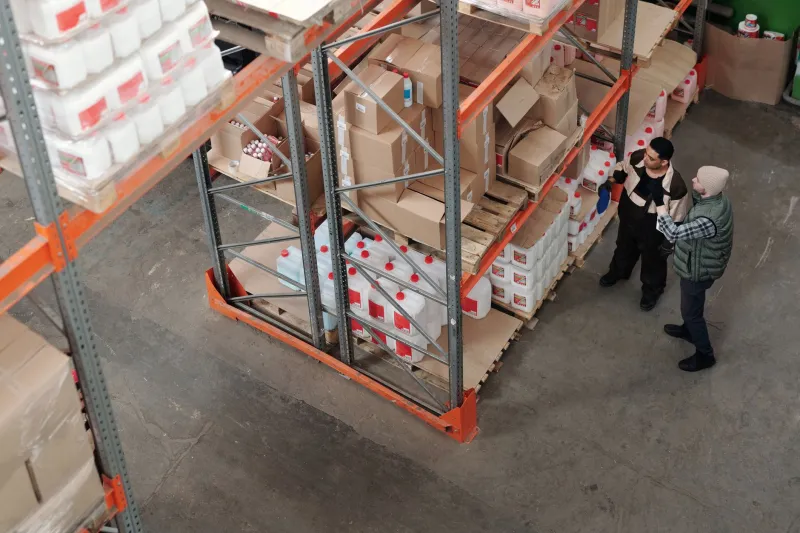
In Chattanooga, Tennessee, a Volkswagen assembly worker — who asked to be identified only as Marcus — keeps a handwritten list of every unresolved grievance on his line. He is not a certified union representative. There is no collective bargaining agreement protecting him. But when a supervisor tried to discipline a coworker last spring for refusing an unsafe task, Marcus convened an impromptu floor meeting, coordinated a work slowdown, and had the discipline reversed within forty-eight hours. No labor board filing. No attorney. No dues-funded bureaucracy. Just organized workers exercising collective leverage.
This is what organizing looks like in the twenty-seven states that have enacted right-to-work legislation — a legal framework deliberately engineered to defund and destabilize traditional union structures by allowing workers to opt out of dues while still receiving the benefits of collective bargaining. The result, by design, is a slow financial hemorrhage that weakens formal unions over time. But the workers who remain are not waiting for a rescue. They are building something different.
The Legal Landscape and Its Limits
Right-to-work laws do not, as their name misleadingly implies, guarantee anyone employment. What they do is prohibit union security agreements — the provisions in labor contracts that require all workers in a bargaining unit to contribute financially to the union that represents them. The practical effect is to create what economists call a free-rider problem: workers who benefit from union-negotiated wages and protections without contributing to the cost of maintaining them.
For national unions that depend on dues revenue to staff organizers, maintain legal departments, and fund political operations, this is a structural assault. Membership and revenue decline together, weakening the institution's capacity to fight — which is precisely the intended outcome.
But formal union membership and worker power are not synonymous. That distinction is the opening through which a new generation of rank-and-file organizers is moving.
Committees, Not Cards
The most effective organizing in right-to-work states is happening outside — or alongside — formal union structures. Workers are forming what practitioners variously call shop committees, solidarity networks, or workplace assemblies: informal bodies with no legal standing, no dues structure, and no certification requirements, but with real organizational capacity.
In a distribution warehouse outside Memphis, a group of workers calling themselves the Floor Assembly has been meeting monthly for two years. They have no affiliation with any international union. They have, however, negotiated informally with management on scheduling practices, successfully pressured a supervisor's removal following documented harassment, and built a mutual aid fund that has helped members weather medical emergencies and unexpected job loss.
"Management doesn't know what to do with us," one member explained. "We're not a union, so they can't use the usual legal tactics. But we're organized, so they can't just ignore us either."
This ambiguity is, tactically, an asset.
The Shop Steward as Organizer-in-Residence
Where formal unions do exist in right-to-work states, the role of the shop steward has evolved considerably. In states with robust union density, stewards often function primarily as grievance processors — the human interface between the contract and the shop floor. In hostile legal territory, the most effective stewards are doing something more expansive.
They are functioning as what labor historians might recognize as workplace organizers in the Industrial Workers of the World tradition: building relationships, mapping power, identifying issues that generate collective anger, and converting that anger into disciplined action. The contract, where one exists, is a tool — but not the only tool, and sometimes not the most important one.
Deanna, a steward at a food processing plant in rural North Carolina, describes her approach as "organizing like there's no contract, even when there is one." She spends more time on the floor than in the union office, deliberately building relationships with workers who have opted out of union membership. "If something goes wrong, they come to me anyway," she says. "And when they do, I'm not going to turn them away. That's how you build the committee."
Direct Action as Standard Practice
Perhaps the most significant tactical shift in right-to-work organizing is the normalization of direct action as a first resort rather than a last one. Conventional labor strategy tends to exhaust formal channels — grievance procedures, arbitration, labor board complaints — before escalating to collective action. In environments where those formal channels are weak or nonexistent, workers are learning to skip steps.
Work-to-rule campaigns, in which workers perform their jobs with strict literal adherence to written procedures and nothing more, have proven particularly effective. They are technically legal, difficult for management to punish, and capable of dramatically reducing productivity in workplaces that depend on workers' informal cooperation and goodwill to function efficiently — which is to say, virtually every workplace.
Similarly, coordinated absenteeism, strategic use of safety reporting mechanisms, and collective refusal of voluntary overtime have all been deployed as pressure tactics by informal worker organizations in right-to-work states — often with measurable results and without triggering the legal exposure that a formal strike might.
Why Syndicalism Travels Better
The tactical repertoire described here has deep roots. The Industrial Workers of the World, founded in 1905, built its organizational model around exactly these principles: decentralized, shop-floor-based organizing, skepticism of legalistic approaches, and a preference for direct action over political lobbying. The IWW's famous "One Big Union" vision never fully materialized, but its tactical legacy has proven remarkably durable.
Syndicalism, broadly understood, emphasizes the workplace as the primary site of struggle and the direct relationship between workers and employers — unmediated by the state — as the primary arena of contest. In states where the legal framework has been deliberately rigged against workers, this framework offers something that conventional unionism currently cannot: a model that does not depend on legal protection to function.
This is not an argument against formal unions. Where they exist and function well, they remain indispensable. But in the twenty-seven states where right-to-work laws have weakened that infrastructure, waiting for institutional rescue is not a strategy. Building from below is.
The Lessons Worth Carrying
What the most effective organizers in right-to-work states have learned — often through painful trial and error — amounts to a set of transferable principles. Relationships precede campaigns. Committees are more resilient than individual leaders. Direct action generates momentum that formal processes rarely do. And the goal is not a signed contract but a workplace where workers have the organized capacity to defend themselves.
These are not new ideas. But in the current moment, with formal labor institutions under sustained political and legal attack across the country, they are urgently relevant ones. Marcus in Chattanooga and Deanna in North Carolina are not waiting for the political climate to change. They are changing conditions on the ground, one shop floor at a time.