Thread and Thunder: Garment Workers Seize the Pattern of Their Own Industry
The American fashion supply chain has long operated on a simple and brutal arithmetic: compress labor costs at every node, externalize risk onto the workers who cut and sew, and capture the resulting margin at the top. From the loft buildings of the Los Angeles garment district to the smaller textile operations still surviving in the Carolinas, this formula has shaped the lives of hundreds of thousands of workers—disproportionately immigrant women, disproportionately unprotected, and historically treated as interchangeable components rather than the skilled craftspeople they are.
But that arithmetic is being contested. Not through the traditional mechanism of collective bargaining with a single employer, and not through legislative lobbying alone. A growing cohort of garment and textile workers, drawing on syndicalist principles of industrial unionism and direct worker control, is attempting something more structurally ambitious: the reorganization of production itself along democratic lines.
The Limits of the Negotiated Contract
Conventional labor strategy in the garment industry has always faced a structural disadvantage. Because major fashion brands rarely employ sewers and cutters directly—relying instead on webs of contractors and subcontractors—the workers who produce the actual goods have no formal employer relationship with the corporations that profit most from their labor. A union contract with a single contractor offers wages and protections within that shop, but it cannot reach the brand's sourcing decisions, pricing structures, or production timelines, all of which ultimately determine whether that contractor survives.
This architecture was not accidental. It was designed, refined over decades, to insulate capital from accountability while maximizing flexibility. When a brand decides to shift production to a cheaper subcontractor—or offshore entirely—the union contract becomes a document governing a relationship that no longer generates income for its signatories.
Workers in organizing drives from downtown Los Angeles to the remnant textile mills of North Carolina have begun articulating this problem with considerable sophistication. The question they are asking is not merely how to win better wages from a single employer, but how to restructure their relationship to the industry as a whole.
Worker-Owned Production as a Strategic Demand
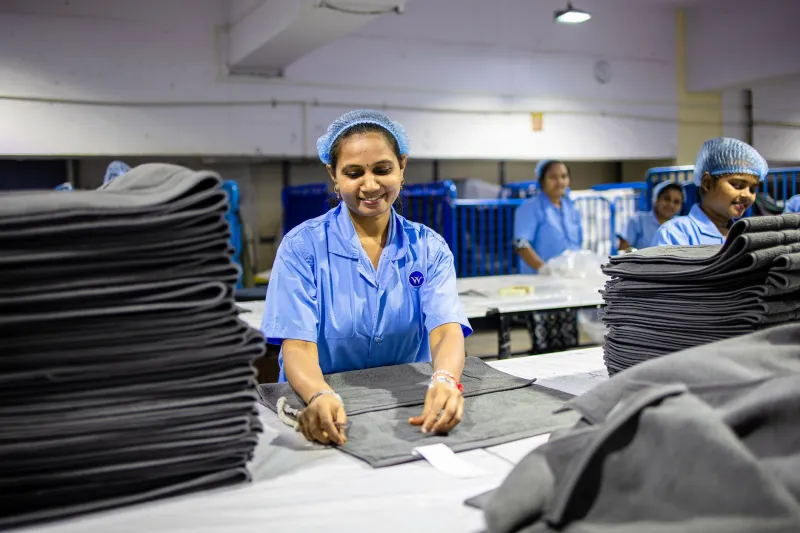
In Los Angeles, where an estimated forty-five thousand garment workers produce clothing for some of the country's most recognizable fast-fashion brands, several organizing formations have moved beyond the grievance model entirely. Drawing on cooperative economics and the syndicalist tradition of industrial unionism, these formations are developing worker-owned production collectives that contract directly with smaller, values-aligned brands—cutting out the exploitative subcontracting layer while establishing internal governance structures in which production decisions, scheduling, and pricing are made collectively.
The logic is straightforward: if the subcontracting layer extracts value without contributing skill, and if that layer also insulates brands from accountability, then eliminating it serves both economic and political purposes. A worker-governed production cooperative can negotiate directly with brands, can refuse orders that fall below a democratically established wage floor, and can accumulate capital internally rather than surrendering it upward.
This is not a marginal or utopian impulse. Several such cooperatives are already operating in the Los Angeles basin, producing garments for independent labels and, in some cases, for larger brands that have sought supply chain transparency as a marketing differentiator. The workers involved describe the shift in governance as transformative—not simply because wages are higher, but because the experience of work itself changes when those performing it determine its conditions.
The International Solidarity Dimension
No serious analysis of garment labor organizing in the United States can ignore the global supply chain in which domestic production is embedded. The same brands that contract with Los Angeles shops also source from Bangladesh, Vietnam, and Guatemala. The price pressure that drives exploitation in American shops originates, in part, from the availability of even cheaper labor abroad.
Syndicalist-aligned formations in the domestic garment sector have increasingly recognized that their struggle cannot be won at the national level alone. Cross-border solidarity networks, some facilitated through global union federations and others built through direct worker-to-worker communication enabled by digital organizing tools, are establishing shared standards and mutual support structures that span production geographies.
The goal is not protectionism—not the construction of tariff walls that would simply redirect exploitation rather than end it. The goal is the coordination of worker power across the supply chain so that brands cannot escape democratic accountability simply by relocating production. When workers in multiple countries are organized around shared governance demands—not just wage floors, but decision-making rights over production conditions—the leverage available to any single group of workers increases substantially.
Pricing Power and Democratic Control
One of the most consequential fronts in this emerging movement involves the question of pricing. In the conventional supply chain, the brand dictates the price it will pay a contractor, and the contractor compresses labor costs to fit within that margin. Workers have no formal voice in this process, and the result is a race to the bottom that is structurally guaranteed.
Worker-governed production entities are inverting this relationship. By establishing internally what a living wage requires, and by calculating production costs accordingly, cooperatives are presenting brands with a cost-of-production figure derived from democratic deliberation rather than competitive pressure. Some brands have accepted these terms; others have not. But the act of establishing a worker-determined price floor—and refusing orders that fall below it—represents a qualitative shift in power.
This pricing discipline requires solidarity across shops. If one cooperative accepts below-floor orders, it undercuts the others. The movement is therefore developing internal accountability mechanisms, shared pricing standards, and mutual support funds that allow individual cooperatives to refuse bad contracts without facing immediate financial collapse. This is industrial unionism applied at the level of the production network rather than the single employer.
What Syndicalism Offers That Business Unionism Cannot
The distinction between this emerging formation and conventional trade unionism is worth making explicit. Business unionism accepts the basic structure of capitalist enterprise—workers sell labor, employers purchase it, and the union negotiates the terms of that transaction. It is a legitimate and historically important form of worker organization, but it cannot address the structural features of the garment industry that make exploitation so durable.
Syndicalism, as a tradition, insists on the eventual displacement of managerial authority by worker self-governance. It does not seek a better deal within an unjust structure; it seeks the reorganization of production on democratic principles. In the garment sector, where the structure itself—the contractor-subcontractor-brand hierarchy—is the primary instrument of exploitation, this distinction is not theoretical. It is the difference between winning a contract that can be voided the next season and building institutions of worker control that persist regardless of which brands are sourcing from whom.
The workers constructing these institutions are not waiting for legislative reform or for brands to discover ethical sourcing on their own. They are building the economic architecture of a different industry, stitch by stitch, cooperative by cooperative, supply chain relationship by supply chain relationship.
The pattern they are cutting is not yet complete. But the fabric is on the table, and the workers are holding the shears.